
Research Areas
The Castellon-Lopez Lab is dedicated to enhancing health outcomes for historically underserved populations, with a focus on the Latino community. Our goal is to create community-informed interventions and decision aids that empower individuals to take an active role in their healthcare choices.
Our team leads several innovative research projects that aim to reduce health disparities and promote patient wellbeing. These efforts reflect the lab's long-term commitment to advancing research at the intersection of cardiometabolic health, obesity and obesity-related cancers, with the goal of emphasizing prevention and improving outcomes in communities that have been historically underserved in clinical and behavioral research.
These projects include:
A Multilevel Evaluation of California's New Medicaid Coverage for the Diabetes Prevention Program (DPP): We assessed the effectiveness of DPP once it became a covered service under Medi-Cal to identify areas of future improvement in accessibility and impact for Medi-Cal beneficiaries.
Understanding DPP Engagement Barriers Among Latinos: We investigated the challenges faced by Latino communities in accessing and participating in diabetes-prevention programs (DPP) by conducting interviews with DPP participants, including those who could not complete the program or enroll, to obtain a holistic view of the DPP barriers to engagement. Challenges and barriers identified through this research laid the groundwork for future studies and programs, such as Feasibility of a Nutrition Intervention at Community Clinics, illustrating a commitment to community-centered interventions.
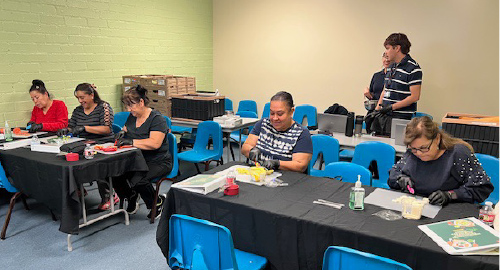
Feasibility of a Nutrition Intervention at Community Clinics
Feasibility of a Nutrition Intervention at Community Clinics: We partnered with communities to create culturally tailored interventions that recruit, engage and retain patients in the DPP at Federally Qualified Health Centers (FQHCs) in L.A. This project explores how to make preventive programs accessible, relevant and sustainable to support lasting health improvements. Participants will provide valuable input and feedback to help make nutrition programs better suited to serve the Latino community.
Movement Over Virtual Reality (MoVR): We partnered with the community to develop a novel intervention using VR for historically underserved communities at risk for Type 2 diabetes and obesity. Phase I engages community members through focus groups to explore the initial acceptability and feasibility of using VR. Phase II evaluates the practicality and user experience of a home-based VR program designed to complement the DPP offered at FQHCs.
Our MoVR project was featured in the Cedars-Sinai Newsroom. Click the links below in both English and Spanish to learn more:
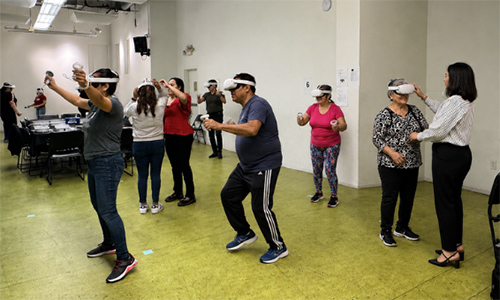
Movement Over Virtual Reality (MoVR), Latinx
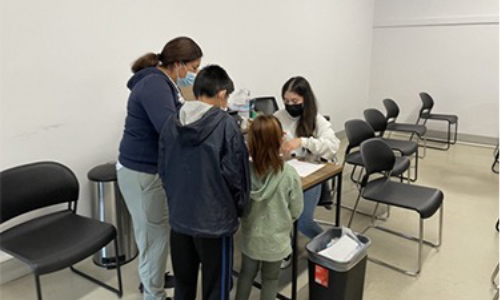
My Vaccine LA/miVacunaLA
My Vaccine LA/miVacunaLA: We developed a pilot cellphone intervention designed to increase COVID-19 vaccine confidence among Spanish-speaking Latino families. In particular, the intervention aimed to address vaccine misinformation among Latino parents/caretakers of minors in historically under-resourced areas in L.A., drawing upon community-based participatory research.
Understanding Model Minority Pressures on Asian American and Pacific Islander Substance Use Treatment and Recovery: We explored the unique challenges that affect treatment and recovery in these communities. The research identifies cultural nuances and inclusive clinical practices to be incorporated into substance use disorder (SUD) care to improve Asian American and Pacific Islander patient outcomes.
Community Advisory Board
The Community Advisory Board (CAB) led by Castellon-Lopez plays a vital role in guiding and supporting the lab's projects by providing community perspectives and insights to ensure the research intentionally addresses community needs. The CAB was founded in 2023 and meets on a bimonthly basis. CAB members collaborate closely with the research team to shape the study design, recruitment strategies, intervention development and dissemination of findings. The CAB is made up of community leaders and representatives from organizations in L.A. County who share the lab's mission of improving community health outcomes for communities with constrained access to healthcare services and knowledge. The current CAB includes a diverse set of individuals from organizations such as:
- AltaMed Health Services Corporation, an FQHC
- LA Woman, a 501(c)(3)
- FEAST LA, a 501(c)(3)
- Live-Work Well
- Northeast Valley Health Corporation, an FQHC
- Seeds of Hope, Episcopal Diocese of L.A.
- The Lundquist Institute at Harbor-UCLA, a 501(c)(3)
Our Commitment to Community-Informed Research
At the heart of our work is a deep commitment to listening to and learning from the communities we serve. We believe that meaningful research is built on trust, collaboration and mutual respect. Real impact happens when community voices help shape the solutions. Our research is only possible through the insight, experiences and leadership of the communities we work with. We're always looking for new ways to collaborate, share knowledge and grow together, because improving health outcomes starts with partnership.
If you're interested in partnering with us, participating in a study or simply learning more about our work, we'd love to hear from you.
Contact the Castellon-Lopez Lab
6500 Wilshire Blvd., Suite 1500
Los Angeles, CA 90048