
Parimon Lab
The Parimon Lab studies how chronic lung injury disrupts the normal epithelial repair process, leading to aberrant lung remodeling in fibrotic diseases. We focus on syndecan-1-driven dysfunction of alveolar type 2 (AT2) cells as a key mechanism of persistent fibrosis. We utilize cutting-edge research models, such as precision-cut lung slices, to decipher the critical signaling pathway.
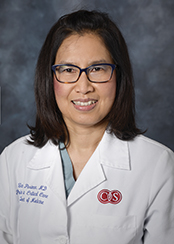
Personal Statement
My research focuses on epithelial cell plasticity, with an emphasis on the role of aberrant epithelial-cell-mediated abnormal lung remodeling in chronic lung diseases. I investigate how AT2 cell senescence contributes to maladaptive repair and persistent fibrosis. My goal is to translate these insights into targeted therapies that restore appropriate regeneration.
Tanyalak Parimon, MD
Breakthrough Research
- Syndecan-1 reprograms extracellular vesicle cargo to drive fibrotic signaling
- Syndecan-1 regulates AT2 epithelial cell senescence to promote aberrant repair
Funded Research
Supported by NIH-NHLBI K08, other NIH institutes and CIRM, our research defines how epithelial dysfunction drives senescence, aberrant repair and persistent fibrosis, thereby hindering normal lung repair.
Publications
Learn more about the recent research publications from the Parimon Lab.
Laboratory Team
Our team integrates basic and clinical expertise to study epithelial dysfunction and repair, with clinical members leading the human lung tissue biobanking for translational research.
Job Opportunities
We are actively recruiting talented individuals to join our laboratory, bringing their expertise to make important breakthroughs.
Collaborations
The Parimon Lab collaborates with a wide range of investigators within Cedars-Sinai and in institutions around the world.
- Jie Sun, PhD, University of Virginia, Charlottesville, VA
- Irina Petrache, MD, National Jewish Health, Denver, CO
- Sina Gharib, MD, University of Washington, Seattle, WA